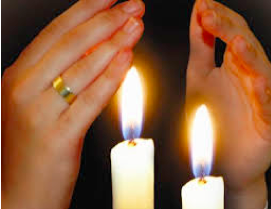
This past Sunday was Tzom Tamuz, a fast marking the day when the walls of ancient Jerusalem were breached. For traditional Jews, it marks the beginning of a spiritual journey that runs through Tisha B’av and the High Holiday season.
According to the rabbis, the breaching of the walls occurred on the anniversary of an even greater tragedy: the day when Moses came down from Mt. Sinai, saw the Golden Calf, and smashed the first set of tablets. For the rabbis, this was the darkest moment in history. The people had sinned by building an idol. And the tablets – the holiest objects to ever exist on earth – were gone.
How do you atone for such a great sin? How do you move forward after such a horrible experience? And how do you get God to forgive you?
The rabbis tell us that Moses spent another eighty days at the top of Mt. Sinai begging for forgiveness. And on the 10th day of Tishrei – the day known as Yom Kippur – Moses came down with the second set of tablets. On that day, Moses told the people the kindest, most loving words that God ever said, “I have forgiven you according to your words.”
Every Yom Kippur is a reenactment of that day – the praying, the fear, the wondering if God will forgive us. And every Yom Kippur begins and ends with that same verse from the Torah, “I have forgiven you according to your words.” More than a confession of sin, Yom Kippur is a reminder of God’s forgiveness, a reminder that God wants only one thing from us: teshuvah. The only thing God wants is for us to come home.
I’ll be writing a lot about teshuvah in the months ahead, but I want to start with one teaching from Rabbi Lord Jonathan Sacks, z”l:
For those who are open to it, Yom Kippur is a life-transforming experience. It tells us that God, who created the universe in love and forgiveness, reaches out to us in love and forgiveness, asking us to love and forgive others. God never asked us not to make mistakes. All He asks is that we acknowledge the mistakes, learn from them, grow through them, and make amends where we can.
No religion held such a high view of human possibility. The God who created us in His image gave us freedom. We are not tainted by original sin, destined to fail, caught in the grip of an evil only divine grace can defeat. To the contrary we have the power within us to choose life. Together, we can change the world.
Judaism constantly asks us to exercise our freedom. To be a Jew is not to go along with the flow, to be like everyone else, to follow the path of least resistance, to worship the conventional wisdom of the age. To the contrary, to be a Jew is to live a life that is not for everyone. Each time we eat, drink, pray, or go to work, we are conscious of the demands that our faith places on us, to live God’s will and to be one of His ambassadors to the world. Jews always have been, and perhaps always will be counter-cultural.
In ages of collectivism, Jews emphasized the value of the individual. In ages of individualism, Jews build strong communities. When most of humanity was consigned to ignorance, Jews were highly literate. In materialistic times, they kept faith with the spiritual. In ages of poverty they practiced tzedekah. The sages said that Abraham was called ivri, the Hebrew, because the world was on one side and he was on the other. To be a Jew is to swim against the current, challenging the idols of the age, whatever the idol, whatever the age.
So high does Judaism set the bar that it is inevitable that we should fall short again and again. This means that forgiveness was written into the script from the very beginning. God, said the sages, sought to create the world through the attribute of strict justice, but He saw that the world could not stand. So what did he do? He added mercy to justice, forbearance to the strict rule of law. Judaism is a religion, the world’s first, of forgiveness.
Beneath the solemnity of Yom Kippur, one fact shines radiant throughout: that God loves us more than we love ourselves. He believes in us more than we believe in ourselves. He never gives up, no matter how many times we slip and fall.
We are once again called to be ivrim. In a world that increasingly stands for cruelty, we are called to be kind. In a world that increasingly stands for racism, forced childbirth, and abuse of women, we are called to care for the stranger, the orphan, and the widow.
In these next few months, we may see the first fruits of our efforts. Through our acts of kindness and our tzedekah, some women will get the medical care they so desperately need. Some lives will be saved. But it will be months before we know the full effects of our efforts.
Whatever the outcome, Yom Kippur will come. And it will remind us that God doesn’t expect us to be perfect. God loves us more than we love ourselves. He believes in us more than we believe in ourselves. He never gives up, no matter how many times we slip and fall.